25th March 2026 – View from the podium: soloists don’t grow on trees….
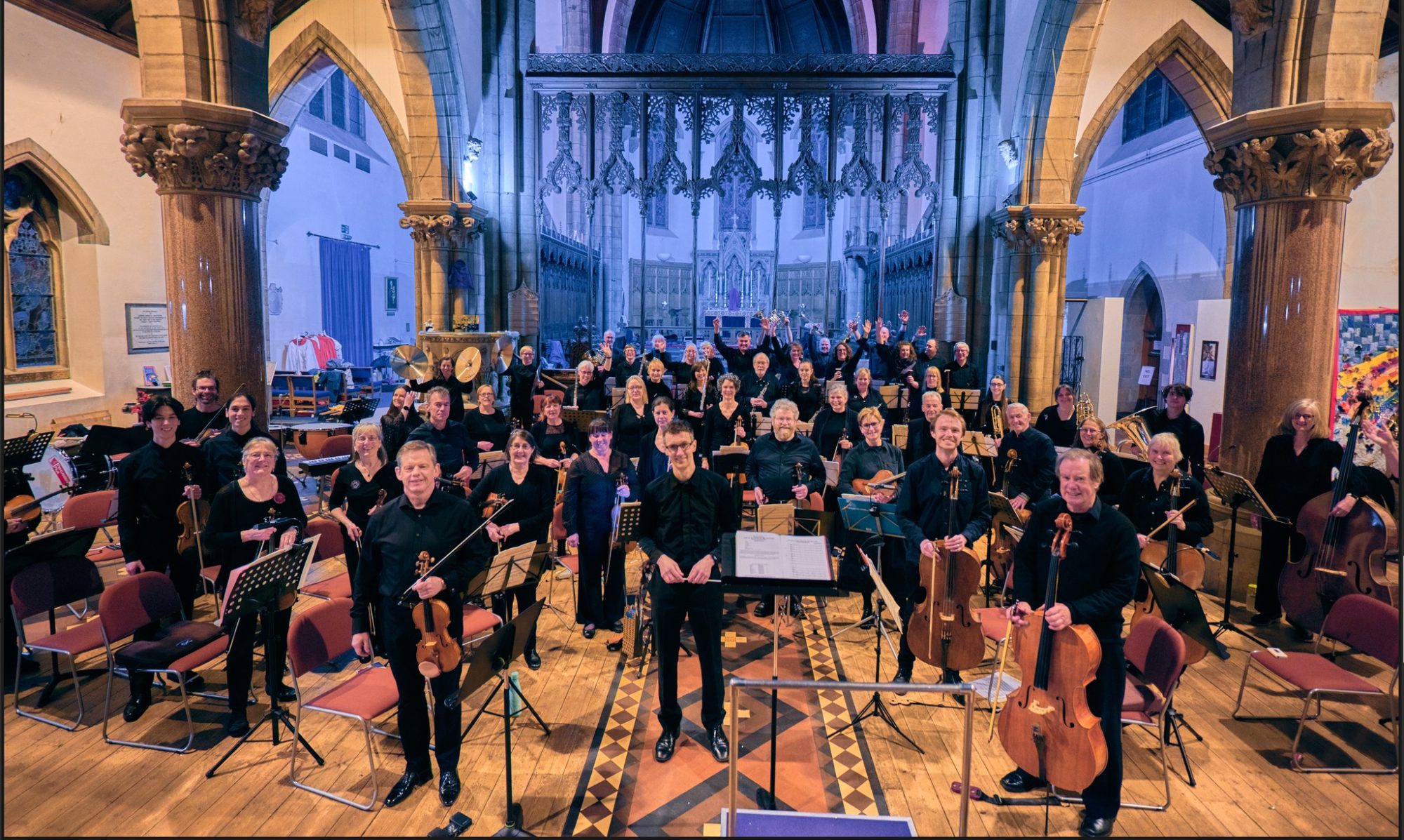
As I write this, just a few days before our Spring 2026 concert in the cathedral, I’m thinking back over the many inspiring collaborations with solo performers which Inverness Symphony Orchestra has enjoyed over the past few years. The orchestra is blessed to have numerous experienced musicians in its ranks, a number of whom have been well-used to solo recitals and chamber music-making through their lives; both David Cushman and Robert Sheach, our principal oboist and clarinettist, have taken on full-length concertos with us in recent seasons, for instance. We have also welcomed professional musicians outside the ISO fold, with Catriona Mackenzie’s dazzling Rachmaninoff the standout item from this past winter’s programme. It is fitting now – in this tenth anniversary year – that we feature what promises to be a particularly memorable concerto outing for us, with Jamie Kenny starring in the fascinating and feverish Concerto for Double Bass by Eduard Tubin. Jamie comes to us from Edinburgh, where he is principal bassist of the Scottish Chamber Orchestra. Hearing him in the piece in rehearsal back in February was truly thrilling – there aren’t many double bass players who can negotiate this piece so ably and with such natural musicality, and we’re fortunate indeed to have drawn him up to the Highlands.
As musical director, I become pretty absorbed, nay – obsessive, in preparations for a concert like this. The Tubin – and also very much the Beethoven and Dvorak – are works which don’t take long to infiltrate the mind and body. Ear-worms a-plenty and bass-infused dreams have been par for the course through the last few weeks. But of course that hasn’t stopped the odd thought drifting towards our future events… Our summer concert “Opera Extraordinaire” is the second of three performances celebrating this tenth anniversary, and it is further proof of the talents to be found within the membership of ISO, this time among the violins. Kathryn Arnould has been with the first violins for some years, but she is widely renowned as an outstanding soprano, versed in early music, art song, and opera. The year will culminate in our winter programme “Tall Tales and Folk Fantasy” which features a much-anticipated solo appearance by our leader Mark Osborne in Rimsky-Korsakov’s colourful showpiece, Scheherazade. Alongside the exoticism of One Thousand and One Nights, we play Paul Dukas’s The Sorcerer’s Apprentice, based on Goethe’s depiction of a chaotic magician’s workshop. Smetana’s famous tone picture of the Vltava river and the terrifically dark and swirling Ruy Blas Overture by Mendelssohn complete that programme. So, all in all, the orchestra’s forthcoming musical menu is looking very attractive. Maybe soloists don’t grow on trees, but we’ve somehow managed to line up a fair few big hitters for this celebratory season. See you there!
Robin Versteeg
7th September 2025 – Kaleidoscope: a view from the podium…
Fresh from the excitement of Sibelius’s Symphony No.2, which crowned our summer season, ISO takes on another monument of the orchestral repertoire this term, in Rachmaninoff’s Second Piano Concerto. While the surging romance of this piece – its fantastic tunes, its moves from march-like swagger to meandering reverie, its cascading solo passages – has made it a household name in the world of piano concertos, it also represented a milestone for the composer himself, even before a note had been played. Having languished under a cloud of depression and self-doubt following the failure of his first symphony in 1897, Rachmaninoff saw an uptick in his outlook in the first few months of the twentieth century, through hypnosis sessions with Dr Nikolai Dahl. The renewed purpose he found in work on the Second Piano Concerto was cathartic and encouraging, and the work premiered in 1901, with a telling dedication to Dr Dahl.
The Rachmaninoff sees a much-anticipated return visit of pianist Catriona MacKenzie, with whom the orchestra collaborated on the Grieg Concerto a few seasons ago. We hadn’t intended for there to be a particular geographical link between the pieces in this programme; the theme is music of changing textures and colour, featuring pieces for strings and wind, alongside works for full symphony orchestra. But it is to two more Russian giants that we turn for the other tutti items of the concert, with Shostakovich’s Festive Overture and Mussorgsky’s Night on Bald Mountain. And American composers complete the line-up. Barber’s Adagio for Strings, an arrangement for string orchestra of the second movement of his op.11 String Quartet, is the sort of piece – like the Rachmaninoff – which finds its way into all sorts of outlets, from pop songs and sporting events to movie soundtracks and video games. October, by the contemporary American composer and conductor Eric Whitacre, will be less familiar to most. This symphonic winds gem, written in 2000, will let the woodwind and brass sections of ISO shine alone: a canvas of gentle melodic and harmonic pastoralism in reflection of the changing light and colour in the autumn season. See you at the concert!
Robin Versteeg
26th November 2024 – Symphonic Ceremony: a view from the podium…
This last year has been an exciting one for ISO! We moved to Monday night rehearsals and our name change reflected the growth in size and prominence of the band, founded as The Ness Sinfonia and now one of the best known and most active musical groups in the Highlands. The repertoire we have taken on is testament to the expertise and energy of our players. Particular highlights for me were Tchaikovsky’s Romeo and Juliet and Wagner’s Die Meistersinger overture, performed in Crown Church last December. And these are two of the composers whose music has been consuming and enthralling us again this term.
I guess the title I gave to our concert on December 7th – Symphonic Ceremony – signifies that it comprises music for occasion, on a grand scale. And while the orchestra has played other Romantic period symphonies, we haven’t until now taken on one of Tchaikovsky’s. While his Fourth Symphony is occasionally referred to as the “Fate”, its ominous opening fanfare in the brass setting off an inexorable rhythmic tread, the Symphony No.5 also espouses its composer’s lifelong obsession with destiny and death. All four movements are miracles of musical structure, scoring, and momentum, and the longer I study it, the more remarkable it seems. The Tannhäuser overture affords similar opportunity for all sections of the orchestra to shine, the famous tune of the opera’s “Pilgrim’s Chorus” beginning with quiet, ecclesiastical dignity in the woodwind and horns at the piece’s outset, and then blazing forth in ceremonious splendour in trumpets and trombones at its climax.
Completing our programme are two pieces with an equally processional flavour, the Pomp and Circumstance Marches Nos.1 and 4 by Elgar, and we look forward especially to playing the bucolic Concertino for Clarinet and Orchestra by Carl Maria von Weber, by turns precise, humorous, and atmospheric. There has emerged over the history of ISO something of a tradition of members of the band performing concerti. The very first concert I gave with what was then The Ness Sinfonia saw our principal trumpet Paul Wilson take on the Haydn Trumpet Concerto at Inverness Cathedral, while in Crown Church last summer, the programme was built around the Mozart Clarinet Concerto, with Robert Sheach as soloist. This December, it is another long-time member, Carol Paterson, who takes to the front to lead us in the copious roulades and ornaments of the Weber. I wonder who’ll be next…
All in all, ISO continues to surprise and invigorate me in every rehearsal, and I know that everyone in the orchestra is buzzing about this programme as I am – do come and hear us!
Robin
3rd June 2024 – We are busy rehearsing for our next concert Family Film Favourites on the 23rd June. Join us a 3pm at Nairn Community and Arts Centre for a fun, children friendly concert, complete with a Disney sign along!
24th January 2024 – We now have our new logo to complete our name change, thanks to Graham Henderson at www.grahamhendersongava.co.uk
21st December 2023 – Excellent audience feedback from ‘Romance at Christmas’ concert
It’s been nearly 2 weeks since our ‘Romance at Christmas’ concert, we had some excellent audience feedback, which included….
‘I came not knowing what to expect and was so impressed by the performance I will definitely come to the next one’
‘What a wonderful performance last night. It was wonderful. I loved it. The orchestra sounded great’
‘Thanks so much for a really wonderful concert last night. I feel thoroughly Basted in Christmas Music . I brought a friend and she said it really lifted her spirits’
What a brilliant end to 2023! I am sure we are all looking forward to 2024 and our next concert on Saturday 23rd March ‘Land of the Mountain and the Flood’
 INVERNESS SYMPHONY ORCHESTRA